
Is Composite Decking Better Than Timber? A Practical Comparison
Key take aways
Choosing the right decking material is a common decision for Australian homeowners, particularly when weighing up composite boards against natural timber. Each option offers different benefits when it comes to durability, maintenance, comfort, appearance and environmental impact.
Rather than there being a single “best” choice, the better option often depends on how and where your deck will be used. This comparison breaks down the key differences to help you decide which material is more suitable for your needs.
What’s the difference between composite and timber decking?
The main difference between composite and timber decking lies in how the materials are made and how they behave over time.
Timber decking is produced from natural hardwood species (such as Jarrah, American Oak, Blackbutt, and more), with each board cut directly from solid wood. Because it is a natural material, timber varies in colour, grain and texture, giving each deck a unique appearance. Different species also perform differently depending on climate, exposure to sunlight and moisture levels.
Composite decking, by contrast, is manufactured using a blend of wood fibres and plastic. These materials are combined to create boards with consistent colour and texture. The manufacturing process allows composite boards to be designed for durability and uniformity, but it also means they lack the natural variation found in real timber.
From a performance perspective, timber is more responsive to environmental conditions. It can expand, contract and weather over time, which contributes to its natural character but also requires ongoing care. Composite materials are more stable in shape and appearance, which is why they are often associated with lower maintenance requirements.
Is composite decking better than timber for durability and maintenance?
When it comes to durability and maintenance, composite decking is often seen as the more convenient option, but that doesn’t automatically make it better for every situation.
Composite boards are designed to resist many of the common issues associated with outdoor structures. They are less prone to rotting, warping and insect damage, and their colour and surface tend to remain more consistent over time. For many homeowners, this translates to less regular upkeep, as composite materials typically do not require frequent oiling or refinishing.
Timber decking can also be highly durable, particularly when hardwood species are used, and the deck is properly maintained. Natural timber is more affected by weather exposure and ultraviolet light, which can cause changes in colour and surface texture over time. Regular cleaning and protective treatments help preserve its appearance and extend its lifespan, but they do require ongoing attention.
The key difference is not overall lifespan, but maintenance commitment. Composite materials prioritise stability and low intervention, while timber offers longevity through care and maintenance. Which option is better depends on how much time and effort you are willing to invest in maintaining your deck.
How do composite and timber decking compare on cost over time?
The cost difference between composite and timber decking is influenced not only by the material itself, but also by the specifics of the job. Decking projects are typically costed per square metre, meaning the overall price can vary depending on deck size, layout and installation requirements.
Timber decking generally has a lower upfront material cost, which can make it a more accessible option for many homeowners. However, ongoing maintenance such as cleaning, sealing or oiling should be considered when assessing long-term value. Read our full guide to learn more about what effects timber decking costs.
Composite decking usually comes with a higher initial cost per square metre, but its lower maintenance needs may reduce ongoing expenses over time. This can make it appealing for those looking to minimise long-term upkeep rather than focusing solely on upfront cost.
Which decking option looks and feels more natural?
Timber decking is widely valued for its natural appearance and tactile feel. Because each board comes from real wood, variations in grain, colour and texture are part of its appeal. Over time, timber can weather and develop a softer, more muted tone, which many homeowners find attractive and authentic.
Composite decking is manufactured to resemble timber, but its appearance is generally more uniform. Colour and texture tend to remain consistent across boards, which can suit modern or highly controlled designs. While some composite products closely mimic timber, they typically lack the natural variation and warmth of real wood.
In terms of feel underfoot, timber is often considered more comfortable, particularly in warm conditions. Composite materials can feel firmer and, in some cases, less forgiving compared to natural timber.
Appearance is ultimately subjective, and the better option depends on whether you prefer natural variation or a more consistent, uniform look.
Which decking performs better in Australian conditions?

Australian conditions can be demanding on outdoor materials, with high UV exposure, heat, moisture and coastal environments all influencing how decking performs over time.
Timber decking responds naturally to its environment. Many hardwood species perform well in Australian climates, particularly in terms of heat regulation, staying cooler underfoot during hot weather. Timber can also be suitable for coastal or bushfire-prone areas when the right species is selected, although exposure to sun and moisture means it will require ongoing care. Take a look at which timber decking to choose based on your needs and climate.
Composite decking is designed to handle environmental stress with minimal change in appearance. It is less affected by moisture and does not splinter, which can be an advantage in wet or high-traffic areas. However, composite materials can retain heat, making them less comfortable to walk on in direct sunlight during warmer months.
Environmental impact of composite vs timber decking
Environmental impact is an important consideration for many homeowners when choosing decking materials, particularly for outdoor projects with a long lifespan.
Timber decking is a renewable resource when sourced from responsibly managed forests. Natural timber has a relatively low carbon footprint and stores carbon throughout its life. Choosing locally sourced hardwood species can further reduce environmental impact by minimising transport emissions.
At Mortlock, sustainability is approached through careful timber selection and responsible sourcing. Specifying timber that comes from well-managed forests helps ensure long-term environmental outcomes while maintaining performance and durability. You can learn more about this approach in our guide on how to specify sustainably sourced timber with Mortlock.
Composite decking is made using a combination of wood fibres and plastic. Some composite materials incorporate recycled plastics, which can help reduce waste. However, plastic is not a renewable resource, and composite products can be more difficult to recycle at the end of their lifespan compared to natural timber.
From an environmental perspective, the more sustainable option depends on sourcing, manufacturing processes and end-of-life considerations. Understanding where materials come from and how they are produced is key to making an informed choice.
Who should choose composite decking — and who should choose timber?
Composite decking may suit homeowners who prioritise low ongoing maintenance and a consistent appearance. It can be a practical option for areas where exposure to moisture is high, or where regular upkeep is difficult to maintain. Those looking for a more uniform, modern finish may also prefer composite materials.
Timber decking may be better suited to those who value natural materials, variation in appearance and comfort underfoot. Homeowners who enjoy the look of real wood and are prepared to carry out routine maintenance often choose timber for its warmth, liveability and long-term character. Timber can also be a strong option where sustainability and renewability are important considerations.
Neither option is universally better. The right choice depends on lifestyle, environment and how the deck will be used over time. Understanding these factors helps ensure the material selected aligns with both practical needs and personal preferences.
Composite vs Timber Decking: Side-by-Side Comparison
| Feature | Composite Decking | Timber Decking |
| Material composition | Manufactured from a blend of wood fibres and plastic | Made from natural hardwood species |
| Appearance | Uniform colour and texture | Natural grain, colour variation and character |
| Maintenance | Low ongoing maintenance | Requires regular cleaning and protective treatments |
| Durability | Resistant to rot, insects and moisture | Highly durable when maintained, varies by species |
| Comfort underfoot | Can retain heat in direct sunlight | Generally cooler and more comfortable in warm weather |
| Weathering over time | Appearance remains relatively consistent | Develops natural weathering and patina |
| Environmental impact | May include recycled materials, harder to recycle | Renewable resource when sustainably sourced |
| Upfront cost | Typically higher per square metre | Often lower per square metre |
| Long-term considerations | Reduced maintenance effort | Ongoing care is required to preserve appearance |
So, which option is right for you?
Choosing between composite and timber decking comes down to priorities rather than one material being objectively better than the other.
At Mortlock, timber decking is approached with a focus on material performance, longevity and responsible sourcing. Our Marineplank, Classicplank and Metroplank timber profiles are designed to address different design and durability considerations, offering examples of how timber can be specified to suit a range of applications without compromising on appearance or performance.
If timber decking is your preferred option, get in touch with our team of timber specialists today to find out more about our decking profiles and options. We look forward to working with you to bring your vision to life.
FAQS
Composite decking can retain more heat than timber when exposed to direct sunlight, particularly in warmer climates. Timber generally regulates temperature better and tends to stay cooler underfoot, making it more comfortable to walk on during hot weather.
Both timber and composite decking can last many years when properly specified and cared for. Composite materials are designed for long-term durability with minimal maintenance, while timber decking can achieve a similar lifespan when suitable species are selected and regular maintenance is carried out.
This depends on how each material is sourced and manufactured. Timber is a renewable resource when responsibly sourced and has a lower carbon footprint over its life. Composite decking may include recycled plastics, but plastic is not renewable and composite materials can be harder to recycle at the end of their lifespan.
Composite decking generally requires less ongoing maintenance, as it does not need regular oiling or sealing. Timber decking requires periodic cleaning and protective treatments to maintain its appearance and performance, particularly in exposed environments.
Yes, timber decking can perform well in Australian conditions when the right species is selected for the environment. Many hardwood timbers are well suited to heat, UV exposure, coastal conditions and high-traffic areas, provided they are properly specified and maintained.
Metroplank is a concealed fix timber decking system designed for a clean, screw-free finish while allowing timber to move naturally over time. Grooved boards lock into flexible zinc-anneal steel clips, which absorb movement as the timber expands and contracts, helping prevent lifting or board displacement.
Watch the video below to learn more about how Metroplank concealed fix decking works.

View our pricing and product guide
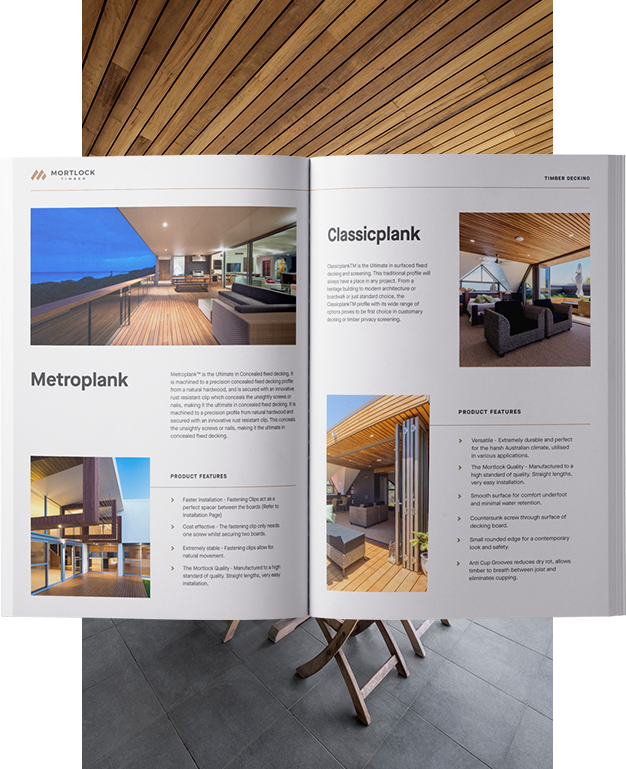
We are committed to bringing you timber products that add value and endure for years to come, even in heavy traffic and harsh weather conditions. We understand the value of efficiency when it comes to installation and keeping hardwood timber costs down. That’s why we’ve spent decades perfecting our designs to make them easier to handle, less wasteful and more efficient to install. This efficiency allows us to offer you premier products that are more cost-effective so that you can experience greater savings on timber wall costs, timber ceiling costs, timber cladding costs and timber decking costs.
Download our Pricing and Product Guide for our complete hardwood timber price list including timber decking prices, timber wall prices, timber ceiling prices and timber cladding prices.