
Top External Timber Cladding Ideas for 2026: Design-Led Solutions for Modern Architecture
Key take aways
External timber cladding continues to be a strong architectural choice, bringing warmth, texture, and a sense of natural balance to building exteriors. It works just as well on contemporary homes as it does on more traditional designs, and when specified correctly, it performs reliably in Australian conditions.
At Mortlock Timber, we work closely with architects and builders to specify timber cladding across a wide range of projects. From vertical battens and wide-board profiles to charred and naturally weathered finishes, timber is being used in more considered ways than ever. In this article, we explore ten external timber cladding ideas shaping architectural design in 2026, with a focus on solutions that balance visual impact with long-term performance.
Why timber cladding is trending in 2026
Timber cladding continues to gain momentum as architects and builders look for materials that offer more than a flat, uniform finish. There is a growing preference for façades with depth, texture, and natural variation, and timber delivers this in a way few materials can. Sustainability is also playing a bigger role in material selection. When sourced responsibly, timber is a renewable resource that supports lower embodied carbon outcomes, while still providing durability and longevity. Combined with advances in cladding systems and finishing options, timber is now being specified with greater confidence across a wide range of external applications, from coastal homes to large-scale architectural projects.
Top 10 external timber cladding ideas
1. Shou Sugi Ban – charred timber cladding

Shou Sugi Ban is a traditional Japanese timber treatment that involves charring the surface of the wood to enhance durability and create a distinctive, textured finish. The charring process produces deep, rich tones while improving resistance to moisture, insects, and weathering, making it well suited to external cladding applications.
Charred timber cladding is often used to create strong architectural contrast, particularly on contemporary façades where darker finishes help define form and shadow. It can be applied across entire elevations or used more selectively as a feature element.
Timber species such as Burnt Ash and Jarrah respond particularly well to the Shou Sugi Ban process, offering both visual depth and long-term performance. When combined with a refined cladding system, charred timber delivers a bold yet considered exterior finish that continues to age with character over time.
2. Vertical timber battens for a minimalist look

Vertical timber batten cladding is a popular choice for projects seeking a clean, contemporary aesthetic. The vertical orientation draws the eye upward, helping façades appear taller and more defined, while maintaining a simple, ordered appearance.
This approach works particularly well on modern residential and commercial buildings, where repetition and shadow lines become part of the design language. Batten spacing can be adjusted to suit the desired level of openness, and in some cases, allows for integrated lighting or screening elements.
System-based solutions such as Mortlock’s Proplank system provide a consistent and efficient way to achieve vertical batten cladding with a refined finish. Timber species like Blackbutt and Pacific Teak are commonly selected for their durability and natural colour variation, making them well suited to demanding external environments.
3. Horizontal timber cladding for a traditional appeal

Horizontal timber cladding remains a timeless option, widely used across residential, coastal, and rural projects. Laid horizontally, timber boards emphasise the width of a building, creating a grounded and balanced appearance that suits both traditional and contemporary architecture.
This style of cladding is often chosen for its familiarity and versatility. It can be detailed to feel crisp and modern or left with more texture to achieve a relaxed, natural look. Finishes such as fine sawn boards help highlight the grain and character of the timber, adding visual interest without overpowering the façade.
Mortlock’s Trendplank system allows horizontal timber cladding to be installed with concealed fixings for a clean, uninterrupted finish. Timber species including Blackbutt, Spotted Gum, and Jarrah are commonly used for their durability and ability to perform well in external applications.
4. Sustainably sourced timber for green buildings

Sustainability has become a key consideration in material selection, and external timber cladding plays an important role in environmentally responsible design. When sourced from well-managed forests, timber is a renewable material that stores carbon throughout its life cycle, helping reduce the overall environmental impact of a project.
Using sustainably sourced timber does not mean compromising on performance. Many Australian hardwoods offer excellent durability and longevity, making them well suited to external cladding in a wide range of conditions. Selecting the right species also supports long-term value by reducing maintenance and replacement requirements.
At Mortlock Timber, a large proportion of timber products are PEFC-certified, ensuring they come from responsibly managed forests. Species such as Ironbark and Jarrah are commonly specified for external cladding where durability, sustainability, and visual character are equally important.
5. Mixed materials – timber and metal combinations

Combining timber cladding with materials such as metal is a common approach in contemporary architecture, creating contrast through texture, colour, and finish. The warmth of timber softens the more industrial qualities of metal, resulting in façades that feel balanced and visually layered.
This combination works particularly well on modern residential and commercial buildings, where different materials can be used to define forms, highlight entrances, or break up larger elevations. Darker timber tones paired with metal detailing can create a strong, considered aesthetic without feeling overly bold.
Timber cladding systems like Trendplank, used in species such as Burnt Ash or Jarrah, integrate seamlessly alongside metal elements. When detailed correctly, mixed-material façades offer both architectural impact and long-term durability.
6. Weathered timber for a rustic charm

Allowing timber cladding to weather naturally is a design choice that embraces change over time. As timber is exposed to the elements, it gradually develops a silver-grey patina, creating a relaxed, organic appearance that works particularly well in coastal, rural, and landscape-driven settings.
This approach is often chosen where buildings are intended to sit quietly within their surroundings rather than stand apart from them. The natural ageing process adds character without compromising performance, provided the right species is selected from the outset.
Timber species such as Blackbutt and Pacific Teak weather evenly while maintaining structural integrity. Where a controlled ageing process or added protection is required, finishes like AQUA2k can be used to support durability while allowing the timber’s appearance to evolve naturally. For more on how finishes influence timber appearance and performance, see our guide on how to choose the right interior finish.
7. Curved timber cladding for fluid designs
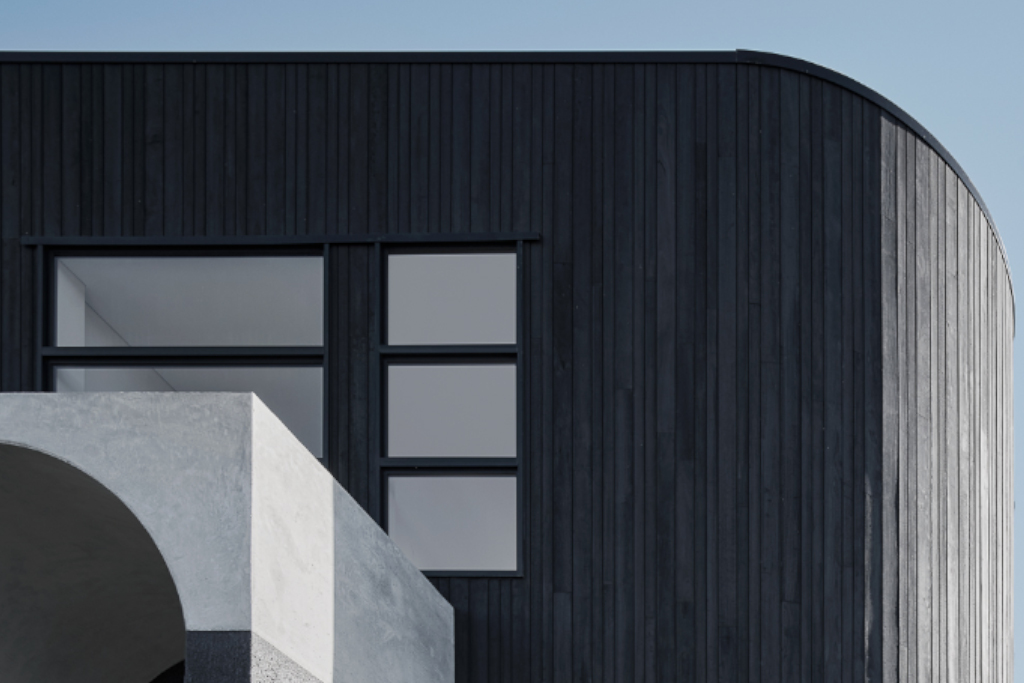

Curved timber cladding introduces a softer, more fluid expression to building exteriors, moving away from rigid lines and sharp edges. It’s often used to create a sense of movement, whether wrapping façades, forming feature walls, or defining entrances and rounded forms.
This approach is particularly effective on projects where architecture is intended to feel organic and sculptural. Curved cladding allows light and shadow to shift across the surface throughout the day, adding depth and visual interest without relying on bold materials or colours.
Convex curved walls can be created using the Trendplank timber cladding system to a certain minimum radius of 1400mm using 120 x 19 size boards & 700mm using 70×19 size boards. Care must be taken when curving timber cladding, as this can open the tongue and groove joints, reducing the cladding’s water resistance. Applying a sealant, such as Sikaflex 11FC or a similar product, in the groove during installation is recommended to maintain weather tightness.
Tighter radii can be achieved with custom profiles.
8. Wide board cladding for bold statements

Wide board timber cladding is often chosen to create a strong, confident architectural presence. Using fewer, broader boards allows the natural grain and colour variation of the timber to take centre stage, giving façades a more expansive and considered feel.
This style works particularly well on contemporary homes and commercial buildings where clean lines and material quality are key design drivers. Wide boards can make elevations feel calmer and less busy, while still delivering impact through scale and texture.
Cladding systems such as Mortlock’s Trendplank support wide board applications with concealed fixings for a refined finish. Timber species including Jarrah and Ironbark are commonly specified for their rich tones, durability, and ability to perform well in external environments.
9. Timber cladding with integrated lighting

Integrating lighting into external timber cladding is an effective way to enhance both form and function. Carefully placed lighting can highlight texture, emphasise vertical or horizontal lines, and add depth to façades after dark, while also providing practical illumination for entryways and outdoor areas.
This approach is often achieved through recessed lighting within batten spacing, under eaves, or along transitions between materials. When done well, the lighting feels subtle and architectural rather than decorative, allowing the timber itself to remain the focal point.
System-based solutions such as Mortlock’s Proplank system allow for precise and consistent spacing, making it easier to incorporate concealed lighting elements. Combined with durable timber species and thoughtful detailing, integrated lighting adds another layer of refinement to external timber cladding designs.
10. Mixed vertical and horizontal cladding for visual interest

Combining vertical and horizontal timber cladding on a single building is an effective way to introduce contrast and definition across different elevations. This approach allows designers to highlight key architectural elements, break up larger façades, or visually separate levels and volumes within a structure.
Using different orientations can also help guide the eye, drawing attention to entrances, feature walls, or transitions between materials. When paired with thoughtful species or finish selection, mixed-orientation cladding adds complexity without overwhelming the overall design.
This idea works particularly well when contrasting timber tones or profiles. For example, pairing the deeper hues of Jarrah with the lighter tones of Blackbutt can create a subtle yet striking visual balance. Mortlock cladding systems can be used together to ensure consistent detailing and a cohesive finish across both orientations.
Timber cladding – a natural choice for architectural design
Choosing the right external timber cladding can shape both the appearance and performance of a building. From traditional horizontal profiles to refined batten systems and contemporary finishes, timber offers a level of versatility that suits a wide range of architectural styles.
At Mortlock Timber, we work with architects and builders to help specify timber cladding that aligns with design intent and performs over the long term. If you’d like guidance on selecting the right species, profile, or system for your next project, get in touch via our website or call 1800 870 452.
FAQS
There is no single “best” timber for external cladding, as suitability depends on location, design intent, and exposure conditions. In Australia, durable hardwoods such as Blackbutt, Spotted Gum, Jarrah, and Ironbark are commonly specified for external cladding due to their strength, stability, and ability to perform well in local climates. Selecting the right species should always consider factors such as weather exposure, maintenance expectations, and desired appearance over time.
Charred timber, including Shou Sugi Ban–style finishes, can perform well in Australian conditions when the appropriate species and detailing are used. The charring process improves resistance to moisture, insects, and weathering, while also creating a distinctive aesthetic. Proper installation, ventilation, and ongoing maintenance remain important to ensure long-term performance, particularly in harsher environments.
Maintenance requirements vary depending on the timber species, finish, and exposure. Some timber cladding is left to weather naturally, developing a silver-grey patina over time, while other applications use protective coatings to retain colour and extend service life. Regular inspections, gentle cleaning, and reapplication of finishes where required help maintain appearance and performance.
Yes, timber cladding is often combined with materials such as metal or concrete to create contrast and visual interest. This approach is common in contemporary architecture, where timber adds warmth and texture alongside more industrial materials. Successful mixed-material façades rely on careful detailing to manage junctions, movement, and drainage.
Timber cladding can perform well in coastal environments when durable species are selected and detailing is carefully considered. Factors such as salt exposure, wind, and moisture require attention to ventilation, fixings, and finish selection. Species known for stability and durability, combined with appropriate systems and maintenance, help ensure long-term performance in coastal locations.
Proper installation is critical to the success of any external timber cladding project. Key considerations include ventilation and drainage, allowance for timber movement, correct fixing methods, and compliance with relevant building standards. Using system-based cladding solutions can assist in achieving consistent detailing and reliable performance over time.
View our pricing and product guide
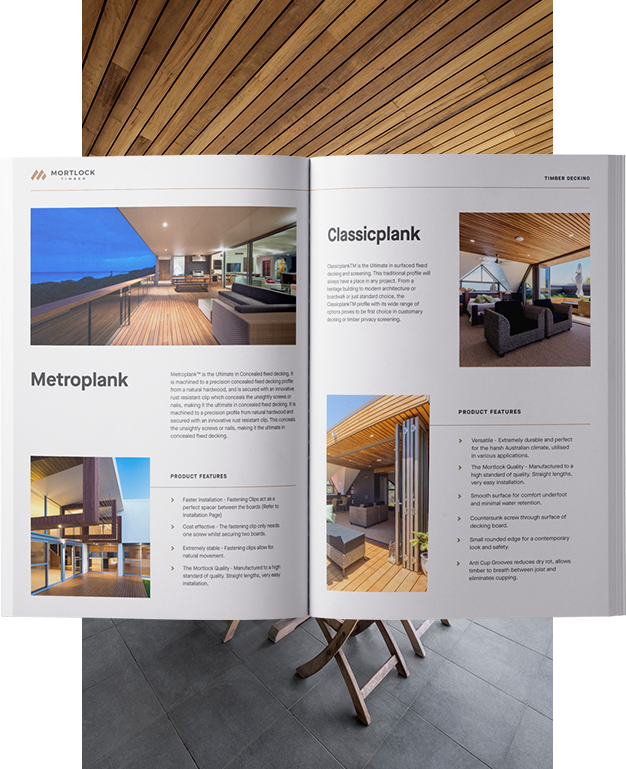
We are committed to bringing you timber products that add value and endure for years to come, even in heavy traffic and harsh weather conditions. We understand the value of efficiency when it comes to installation and keeping hardwood timber costs down. That’s why we’ve spent decades perfecting our designs to make them easier to handle, less wasteful and more efficient to install. This efficiency allows us to offer you premier products that are more cost-effective so that you can experience greater savings on timber wall costs, timber ceiling costs, timber cladding costs and timber decking costs.
Download our Pricing and Product Guide for our complete hardwood timber price list including timber decking prices, timber wall prices, timber ceiling prices and timber cladding prices.