
Black Timber Cladding: A Complete Guide for Architects & Designers
Key take aways
Why Black Timber is Trending
Black timber has become a defining feature in contemporary architecture, offering strong contrast against lighter materials like concrete, render and glass. Its ability to create depth and shadow makes it equally suited to bold façades and refined interior applications. Beyond aesthetics, modern finishing and coating systems allow architects and designers to achieve varying levels of durability and maintenance.
The use of black timber in contemporary architecture can be traced back to traditional Japanese techniques, where timber was charred to improve durability and longevity. This method has influenced modern applications, with both charred and stained systems now widely used to achieve black finishes across a range of product.
Charred vs Stained Black Finishes
Black timber can be achieved through two approaches. Charred finishes and stained finishes. Each offer a distinct aesthetic and performance outcome, depending on the needs of the project scope, budget and design intent.
Charred finishes
Involves burning the surface of the timber to create a carbon layer. This results in a highly textural, natural finish that is widely used in architectural applications. This char layer can also act as a protective barrier, which can reduce long-term maintenance requirements.
- Allow the natural grain, texture, variation and char layer to remain visible
- Create a more organic, less uniform appearance
- Char layer holds the timbers texture strong even in external environments.
Stained finishes
These are typically coating systems that absorb into the fibres of the timber, delivering a more controlled and consistent finish.
- Deliver a more uniform appearance
- Offer a precise and predictable outcome
- Typically requires regular maintenance to maintain their original look
Selecting between these approaches often comes down visual preference, maintenance expectations and project budget, with charred timber often positioned as a higher-cost, lower-maintenance option compared to stained systems.
Performance Considerations
When specifying black timber, performance should be conferred alongside aesthetics, dark finishes absorb more UV, which can accelerate fading depending on the system used. However, timber has a relatively low thermal conductivity compared to materials such as steel or concrete, meaning it transfers less heat through the building. This makes it a suitable material for façade applications. Maintenance expectations can also vary with some finishes designed to weather out naturally, while others require periodic re-coating to maintain a consistent colour and depth.
Interior vs Exterior Applications
It seems that black timer continues to grow in popularity across both interior and exterior applications, particularly within modern and contemporary architecture. As projects increasingly shift toward the use of natural materials such as timber, stone and concrete, black finishes offer a way to introduce contrast while still maintaining a cohesive, material driven palette. While charred timber can be used internally, it is important to consider that the carbon layer is relatively soft and may be susceptible to marking or damage in high-contact areas such as joinery or doors.

Interior Applications
Within interiors, black timber is often used to insert depth and definition to a space. Used mostly to create standout ceilings and wall features, lining and batten systems can help anchor a space and highlight architectural features without overpowering them. Designers are increasingly pairing black timber with lighter timbers, neutral finishes and soft furnishings to achieve a blanched, layered aesthetic. As interior spaces are protected from the elements, there is greater flexibility in the choice of finish and pairing of materials, allowing for a bold or subtle outcome.

External Applications
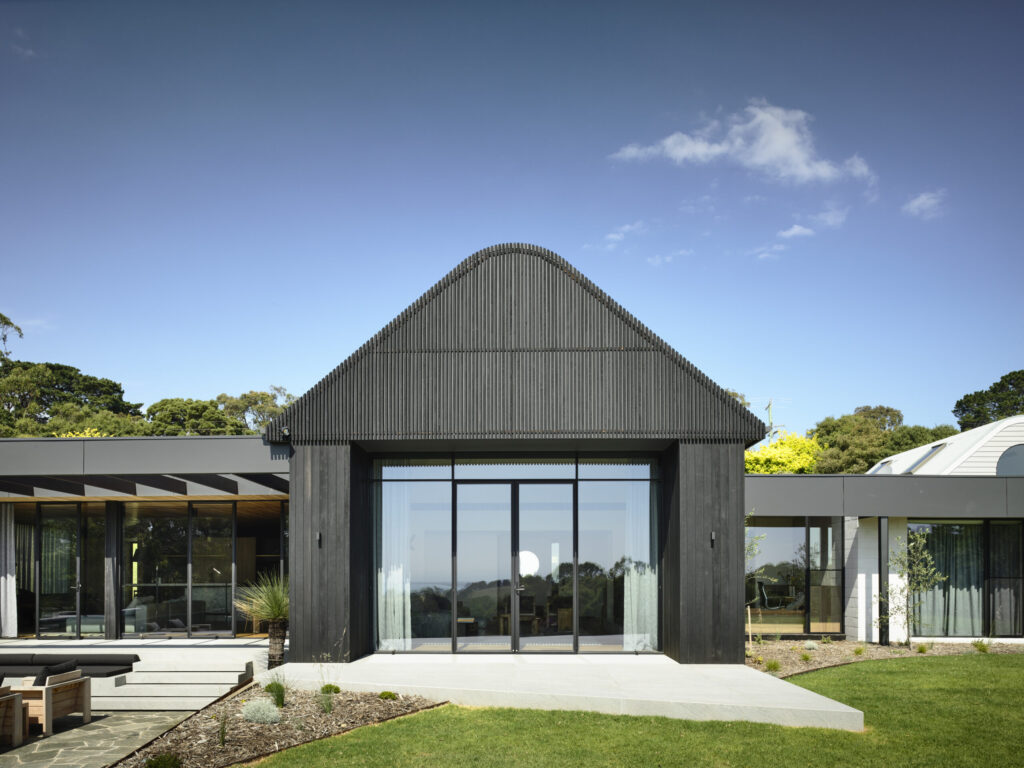
Externally, black timber is frequently used to define form and create a strong visual presence. Dark façades can emphasise clean lines and geometry, while also allowing surrounding materials such as landscaping, concrete or glazing to stand out in contrast. Black timber also aligns with the broader trend towards natural, textural materials that offer resistances to UV and provide a more tactile alternative to synthetic cladding options.
Sun exposure, moisture and environmental conditions become key factors for exterior material selection. The selected materiel and finish needs to not only achieve the desired look, but also respond well to the elements over time.
Mortlock Black Timber Options
At Mortlock Timber, a range of systems can be used to achieve black timber finishes, each offering a distinct balance of appearance, durability and maintenance. Rather than a one-size-fits-all solution, each finish responds differently to environmental conditions, application type and design intent. Our black timber options allow for greater flexibility in how black timber is specified across a project. Black timber systems can be understood in two parts – the timber species itself, and the method used to achieve the black finish.

Charred Timber (Shou Sugi Ban)
Our traditionally inspired charred timber finish enhances the natural texture of the timber while providing a deep, rich black appearance. The charring process forms a carbon layer on the surface, which is inherently UV stable and does not rely on film-forming coatings, meaning it won’t peel or require re-coating to maintain colour.
Over time, the surface may soften or evolve depending on exposure, particularly in high-traffic or exposed external environments. Maintenance requirements will vary depending on the desired outcome, it’s recommened to incorporate a light maintenance routine to retain a more consistent appearance.
To reduce carbon rub-off and help maintain the depth of the black finish, we typically recommend coating Shou Sugi Ban finished timbers with a penetrating oil system such as WOCA or Cutek. With both coatings using a black pigment, these finishes help bind the surface, enhance colour richness and provide a more controlled finish outcome over time.
Our Shou Sugi Ban charred finish performs best when applied to a stable, durable timber species. These include our Thermally Modified timber species such as Malvec, Burnt Ash & Vacoa.
For a more detailed overview of the process, performance and applications of Shou Sugi Ban, refer to our full guide: The Ultimate Shou Sugi Ban Charred Timber Guide

WOCA Black
A penetrating oil system designed to enhance the natural character of the timber while introducing a rich matte black tone. Unlike film-forming coatings, WOCA works within the timber surface, allowing the grain, texture and variation to remain visible while delivering a refined, timber finish.
WOCA is well suited to applications where a more organic, material-driven aesthetic is desired. This is particularly relevant as darker finishes can increase heat absorption, so including a system that moves with the timber can help accommodate this behaviour without the risk of peeling or cracking.
Although maintenance is required to retain colour depth and performance over time, particularly in external or high-exposure environments. The maintenance process is relatively straightforward, involving light, chemical-free cleaning and re-coating without the need to sand back the timber or remove the previous coating.
WOCA Black is specified for interior and exterior applications including cladding, battens and screening. It can be applied across a range of timber species and is often selected for projects that are specifying a uniform black aesthetic. WOCA Black is often paired with Shou Sugi Ban charred timber as a premium finish coating to preserve the integrity of the timber and prevent any charcoal rubbing off the surface.
For further guidance on application, maintenance and suitability, refer to our full guide: Using WOCA Exterior Oil With Natural Timber
CUTEK Black Ash
A penetrating oil system designed to protect timber from within while enhancing its natural character. When combined with Cutek Extreme CD50 Black Ash colourtone, Cutek oil delivers a darkened finish that allows the grain and variation of the timber to remain visible, resulting in a softer and more natural black aesthetic when compared to alternate coatings.
Similar to WOCA and unlike surface coatings, Cutek is non film-forming, allowing the timber to move freely in response to environmental conditions, this makes it well suited to exterior applications. As the timber is exposed to UV, the pigment will gradually fade over time, while the oil continues to protect the timber substrate.
Maintenance involves periodic recoating to restore colour depth with the frequency of maintenance dependant on exposure levels and desired look. This is achieved without the need for sanding or stripping, as Cutek maintenance involves light cleaning and infrequent re-oiling, this makes it a practical option for long-term upkeep.
Cutek with Black Ash colourtone is suitable for a wide range of timbers and is commonly used across cladding, battens and other external timber applications. It is often specified for projects that prioritise a quality timber finish that is kind to a tight budget and provides ease of maintenance for a more organic material expression.
For further guidance on performance and selecting the right coating system, refer to our guide on: Which Timber Coating Is Right For My Project

How to Choose The Right System
Selecting the right black timber finish comes down to aligning the desired aesthetic with performance requirements, long-term maintenance expectations and budget. Rather than a single solution, each system offers a different balance between appearance, durability and price range.
A few key considerations can help guide the decision:
What is your desired aesthetic?
Consider whether the intent is a consistent, uniform black finish or a more natural, textural outcome. Pigmented coating systems like WOCA and Cutek allow grain and variation to show while providing a controlled, even appearance. Whereas a Shou Sugi Ban charred finish emphasises deep textural characteristics to stand out with differences in crackling and char developing from the timber species selection.
What are your maintenance expectations?
Maintenance requirements will vary depending on exposure and finish system, but as a general guide, stained black timber finishes may require reapplication every two to four years to maintain a consistent appearance. Establishing a strong initial coating system, typically through multiple oil applications during and after installation can significantly improve long-term performance and reduce maintenance frequency.
If reducing long-term maintenance is a priority, charred timber is often preferred due to its protective carbon layer.
Where will the timber be installed?
Interior applications allow for greater design flexibility whereas external environments require consideration of exposure, moisture and thermal movement. Dark finishes absorb more heat, making it important to select a system that can accommodate movement and environmental stresses. You can dive deeper into how UV and environmental exposure can affect dark and blackened timber in our other blog post: Thermal Behaviour of Black Timber Façades.
What is the budget?
Identifying the budget of the project should be one of the first project considerations before specifying a black timber. Identifying the correct timber species, finishes and systems that can achieve the design intent helps discern how the timber will perform. Understanding what selections are within scope helps progress the project and highlights maintenance requirements and design considerations for your specific project.
Stained black timber systems can provide a more cost-effective alternative while still achieving a similar visual outcome.
What do you want it look like in 10 years?
It’s important to consider how the timber is expected to look, not just at completion, but over time. Some projects prioritise long-term consistency, while others embrace natural aging. For black timber options, it’s recommended to implement a maintenance routine to uphold the pigment or char of the blackened timber.
By considering these factors early in the design process, the selected system can be better aligned with both the visual intent and the practical requirements of the project. Ensuring a more predictable and successful outcome.
Some Common Mistakes with Black Timber
A common mistake when specifying black timber, particularly stained systems, is not applying sufficient coats of oil during and after installation. Timber absorbs oil over time, and building up multiple coats early on helps improve durability and extend maintenance intervals.
Practical Tips for Architects and Designers
- Consider texture early in the design process
- Review timber samples in natural light
- Detail for movement and shadow lines
- Align finish selection with appetite for maintenance
- Be intentional with contrasts and material pairing
- Realise expectations around timber aging
Let Us Help With Your Project!
If you’re specifying black timber, selecting the right systems early is key to achieving the desired aesthetic and long-term performance. Our team can assist with final selection, application suitability and maintenance considerations to ensure the outcome aligns with your project requirements.
Speak with our team on 1800 058 420 or enquire via our website. For product specifications and pricing, download our Pricing and Product Guide.
FAQS
Black timber refers to timber that has been treated or finished to achieve a dark or black appearance. This can be done through charring (SHOU SUGI BAN), penetrating oils with pigment, or film-forming coating systems, each offering different visual and performance outcomes.
Natural finishes, such as oils or charred timber, work within the timber and allow for the grain and variation to remain visible. Coated finishes sit on the surface, providing a more uniform and consistent colour, but typically require recoating to maintain their appearance.
Yes, black timber can be used externally, but the chosen system must be suited to exposure conditions. Darker finishes absorb more heat, so it’s important to select a system that can accommodate movement and perform well under UV and environmental exposure. BAL requirements can limit exterior timber species selection which can also influence the choice of finish system.
Maintenance depends on the system used. Coatings generally require scheduled reciting to maintain a consistent finish, while penetrating oils and charred finishes can be more easily maintained or allowed to weather over time.
Some finishes, particularly oil-based systems with pigment, will gradually fade with UV exposure. Coatings are designed to retain colour for longer but will eventually require maintenance. Charred finishes tend to remain more stable in colour but may evolve over time.
The right finish depends on the desired look, level of exposure and maintenance expectations. Projects seeking a uniform appearance may favour coatings, while some opt to embrace natural variations and aging may prefer oil-based or charred systems.
View our pricing and product guide
We are committed to bringing you timber products that add value and endure for years to come, even in heavy traffic and harsh weather conditions. We understand the value of efficiency when it comes to installation and keeping hardwood timber costs down. That’s why we’ve spent decades perfecting our designs to make them easier to handle, less wasteful and more efficient to install. This efficiency allows us to offer you premier products that are more cost-effective so that you can experience greater savings on timber wall costs, timber ceiling costs, timber cladding costs and timber decking costs.
Download our Pricing and Product Guide for our complete hardwood timber price list including timber decking prices, timber wall prices, timber ceiling prices and timber cladding prices.